|
|
||||||||||
|
||||||||||
 |
||||||||||
|
||||||||||
| This page was created as a resource for a ABC Hobart, Tasmania, Australia radio program that had Peter Newlinds on the Steinbeck trail. Read his online story here. | ||||||||||
|
||||||||||
| "Cannery Row in Monterey in California is a poem, a stink, a grating noise, a quality of light, a tone, a habit, a nostalgia, a dream." --Cannery Row | ||||||||||
| Use the tool at left to zoom in closer for more detail. Click on the red markers for information on each site. | ||||||||||
|
||||||||||
| See Don Bain's 360-degree full-screen panorama of the Ed Ricketts memorial at Drake and Wave streets. | ||||||||||
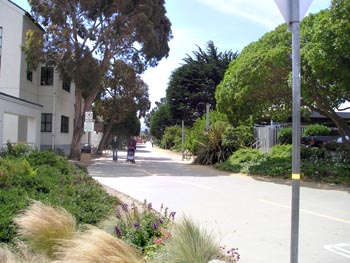
 Looking down David Avenue, on Cannery Row, is the Monterey Bay Aquarium The Hovden Food Products Corp./Portola Packing Co. building (which operated from July 7, 1916 to February 9, 1973, and was the last operating cannery on the Row) is now occupied by the Monterey Bay Aquarium, which opened to the public in 1984. |
||||||||||
|
If you look to your
right at this point in the walk, you will see the American Tin
Cannery and Hopkins
Marine Station. After a few years, a second village
formed mid Row, along McAbee Beach -- between today's Prescott
and Hoffman avenues -- on the site of an abandoned shore whaling
operation. |
||||||||||
|
||||||||||
|
||||||||||
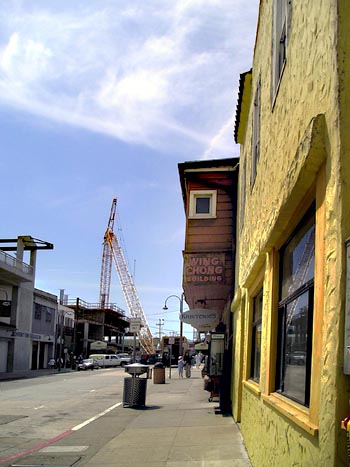
Continuing on Cannery Row,
and looking back towards the Aquarium, one can still feel the
flavor of the era evoked by Steinbeck.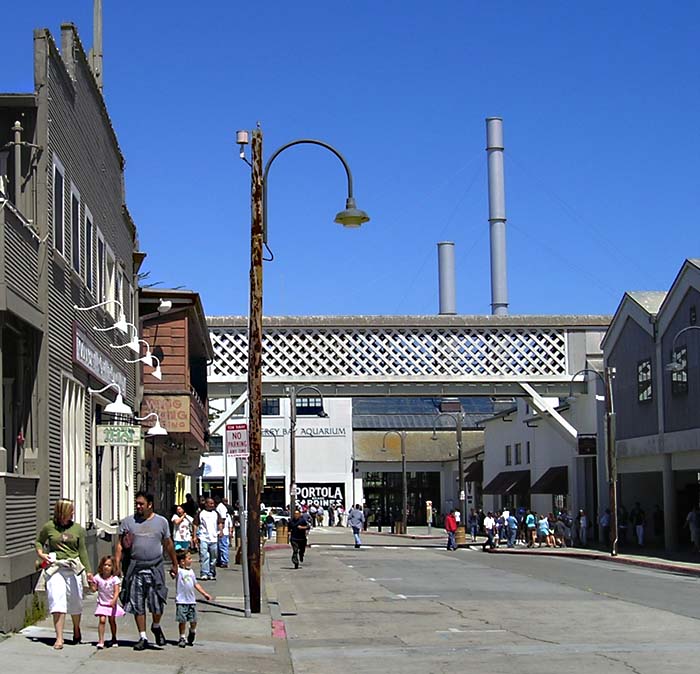 You can catch a glimpse of the old Wing Chong market sign on the rust-colored building to the left of the street light. |
||||||||||
|
||||||||||
 Here is Ed "Doc" Ricketts' Pacific Biological Laboratories (know as Western Biological in the books) at 800 Cannery Row. The doors of the lab, whose back touches Monterey Bay, were open when this photo was shot. It looked like they were setting up for an event. After Ed Ricketts died, the lab became the home of a men's private club, whose members included local judges, businessmen, and artists. Three local cartoonists were members: Gus Arriola (Gordo), Hank Ketcham (Dennis the Menace), and Eldon Dedini (Playboy, New Yorker, etc.). The building is now maintained by the City of Monterey, and ownership is transitioning to the City.  Another shot of the lab, without the trucks. |
||||||||||
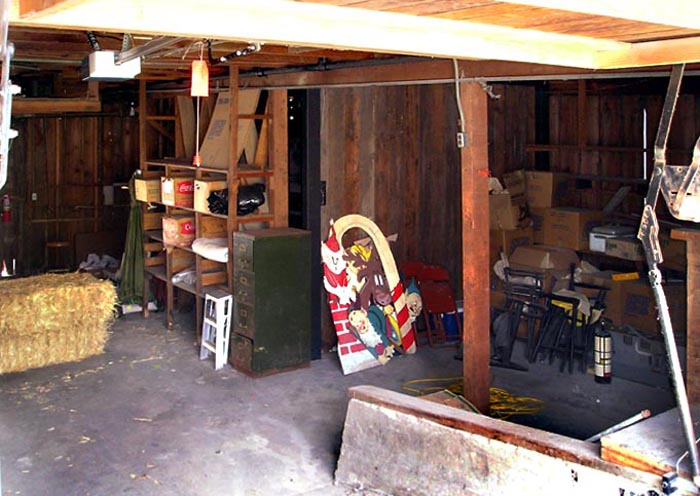 The basement of the lab from the Cannery Row side. This is where most of the actual preparation work for PBL's specimens was done. Ricketts and his family lived upstairs. |
||||||||||
|
||||||||||
Cross Cannery
Row at Ed's Lab and you will see 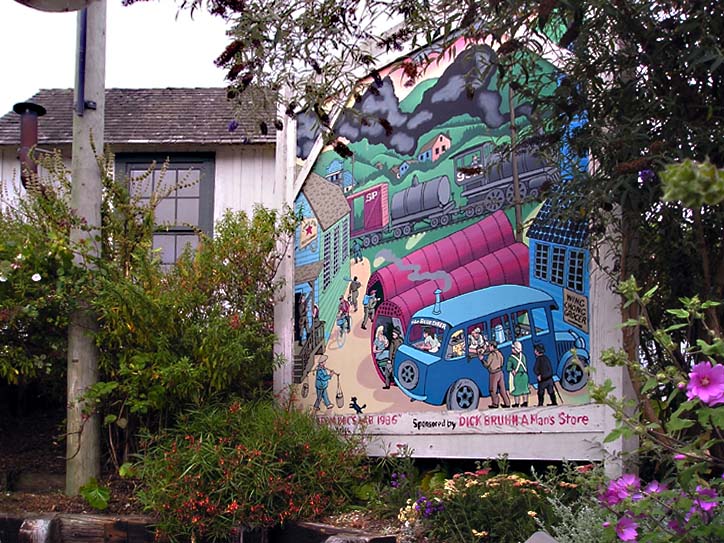 The short walkway up from the Row to the recreation trail is named Bruce Ariss Way, in honor of the Monterey artist who was part of Steinbeck and Ricketts' circle. He was part of the group that socialized at the lab. This is a mural panel by Ariss that was originally part of a larger grouping (by Monterey-area artists) along the waterfront. The other mural panels were removed when construction on the hotel next to the lab resumed in 2006-7. |
||||||||||
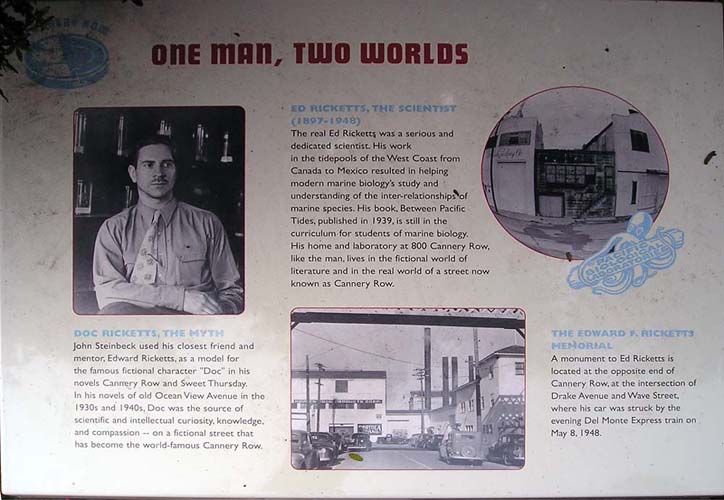 Also across from Ricketts' lab, at the base of Bruce Ariss Way, is an interpretive sign about Ed and the Row. |
||||||||||
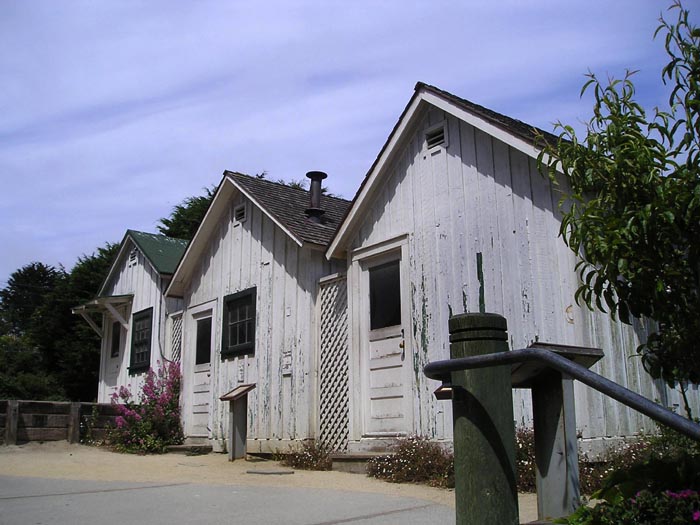 Further up the hill (the chicken walk of Cannery Row), are three workers' cottages which show what the average worker's housing looked like. They have been moved to this site. |
||||||||||
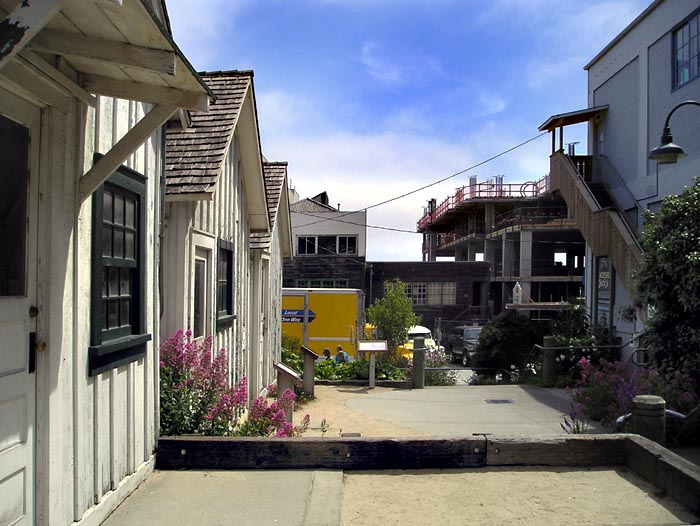 A little further uphill, you can see Ed's lab from the front of the cottages. 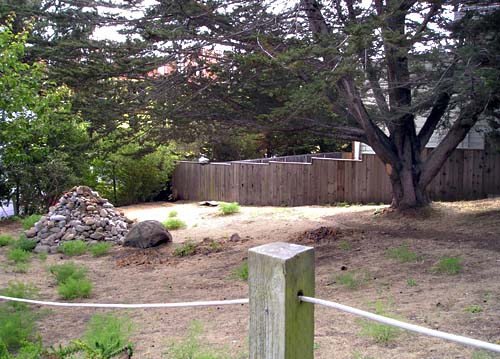 The area at the top of Bruce Ariss Way is the probable site of Mack and the boys' Palace Flophouse. |
||||||||||
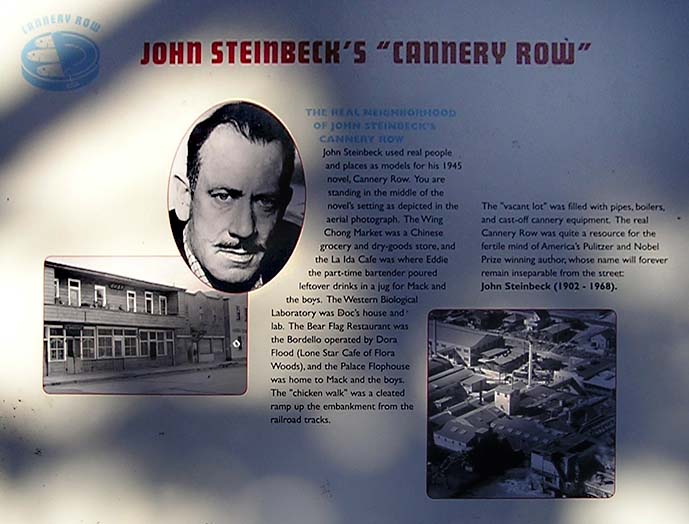 Across the rec trail is another interpretive sign. |
||||||||||
When you reach
the top of Bruce Ariss Way, you are on the rec trail. Turn left,
follow the trail to Prescott Avenue, and head up to Wave Street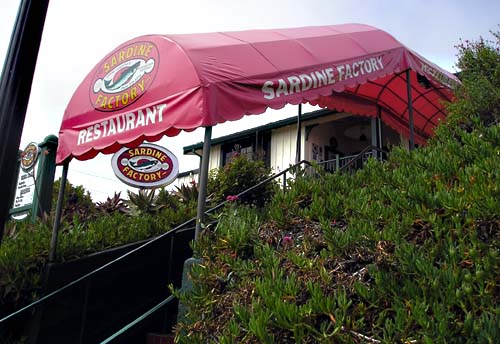 At 701 Wave Street, you'll see the long awning leading to the entrance of the Sardine Factory Restaurant. It was immortalized in the 1971 Clint Eastwood movie, Play Misty for Me, as the location where Eastwood's character picks up Jessica Walter's character. Continue across Prescott 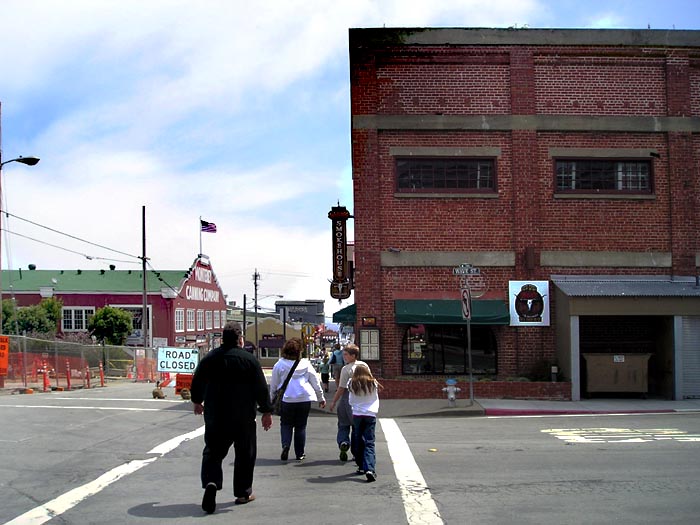 You are now across from a number of old cannery buildings. This view is looking back down towards the Row. There is a bronze statue of Steinbeck in the plaza at the foot of Prescott. |
||||||||||
 This is the center of the same block of Wave, across from the Monterey City parking lot where you can get the best chance at long-term parking near the Row. Oh no, another Dalek! |
||||||||||
|
2005 marked the 60th anniversary of the publication of Cannery Row, and the street has seen many changes since then. The overpowering smell of the reduction plants--which caused a great deal of contention between Monterey and P.G. and inspired the saying "Carmel-by-the-Sea, Monterey-by-the-Smell, and Pacific Grove-by-God"-- is gone now, and tourism has replaced the canning and reduction of sardines as the main industry. Even with all the changes, the popularity of Steinbeck's work endures, and his readers are apt to hear the strains of church music from Doc's phonograph wafting over the Row. |
||||||||||
|
||||||||||
|
||||||||||
 This page is copyright © 2007 - 2009 by Esther Trosow. All rights reserved. Contact etrosow@93950.com Last updated April 28, 2009. |